Why Modern Exterior Finishes Make a Property Stand Out
Modern exterior finishes do more than make a property look fresh. They shape first impressions, improve long-term durability, and help a home or commercial building feel intentional from the street. In today’s market, curb appeal is no longer just about paint color or a tidy lawn; it's about a complete exterior story that combines material choice, texture, sustainability, and function. For property owners considering upgrades such as landscape design or a more comprehensive landscape construction plan, the right finish strategy can turn an ordinary façade into a standout feature.
The shift is especially visible in 2026 design trends, where warm neutrals, natural textures, and long-lasting materials are replacing the cooler, high-contrast looks that dominated for years. Industry research and design publications have highlighted this change, and the numbers support it: a 2026 survey cited in the research package shows that 65% of homeowners now prefer warm, natural color schemes over traditional cool grays. That preference reflects a broader desire for exterior spaces that feel grounded, timeless, and connected to the surrounding landscape. For a helpful overview of climate and durability considerations, the U.S. Department of Energy’s Energy Saver resources offer a good starting point for understanding how building materials and exterior performance can work together.
In this guide, we will break down why modern exterior finishes stand out, which trends matter most, how to choose materials that last, and how thoughtful planning can improve both visual impact and everyday use. Whether you're updating a private residence, enhancing a commercial property, or planning a full outdoor transformation, the principles are the same: choose finishes that look current, age gracefully, and support how people actually use the property.
The New Definition of Curb Appeal
First impressions now start with texture and tone.
For decades, curb appeal was often treated as a simple checklist: new paint, a neat lawn, and maybe an updated front door. Today, property owners and designers see it differently. Modern curb appeal depends on how materials interact with one another, how light hits the façade, and whether the exterior feels balanced from driveway to entry. That is why elements like stone veneer, timber accents, and layered hardscapes are becoming more common in projects that also include hardscape construction.
Warm and natural palettes are especially effective because they soften the visual edge of a building without making it feel dated. Earthy greens, mineral grays, taupes, and natural wood tones create an exterior that feels more inviting and less rigid. This is a major reason designers are moving away from stark black-and-white combinations in favor of layered, nature-inspired finishes that work with landscaping rather than competing with it.
Exterior finishes now support property identity.
Modern exterior design is also about branding, especially for businesses. A building exterior communicates values before anyone steps inside. Clean lines and durable materials suggest quality, while carefully selected textures signal attention to detail. For homeowners, the same principle applies on a more personal level: the exterior should reflect the style of the people who live there and the way they want the property to feel.
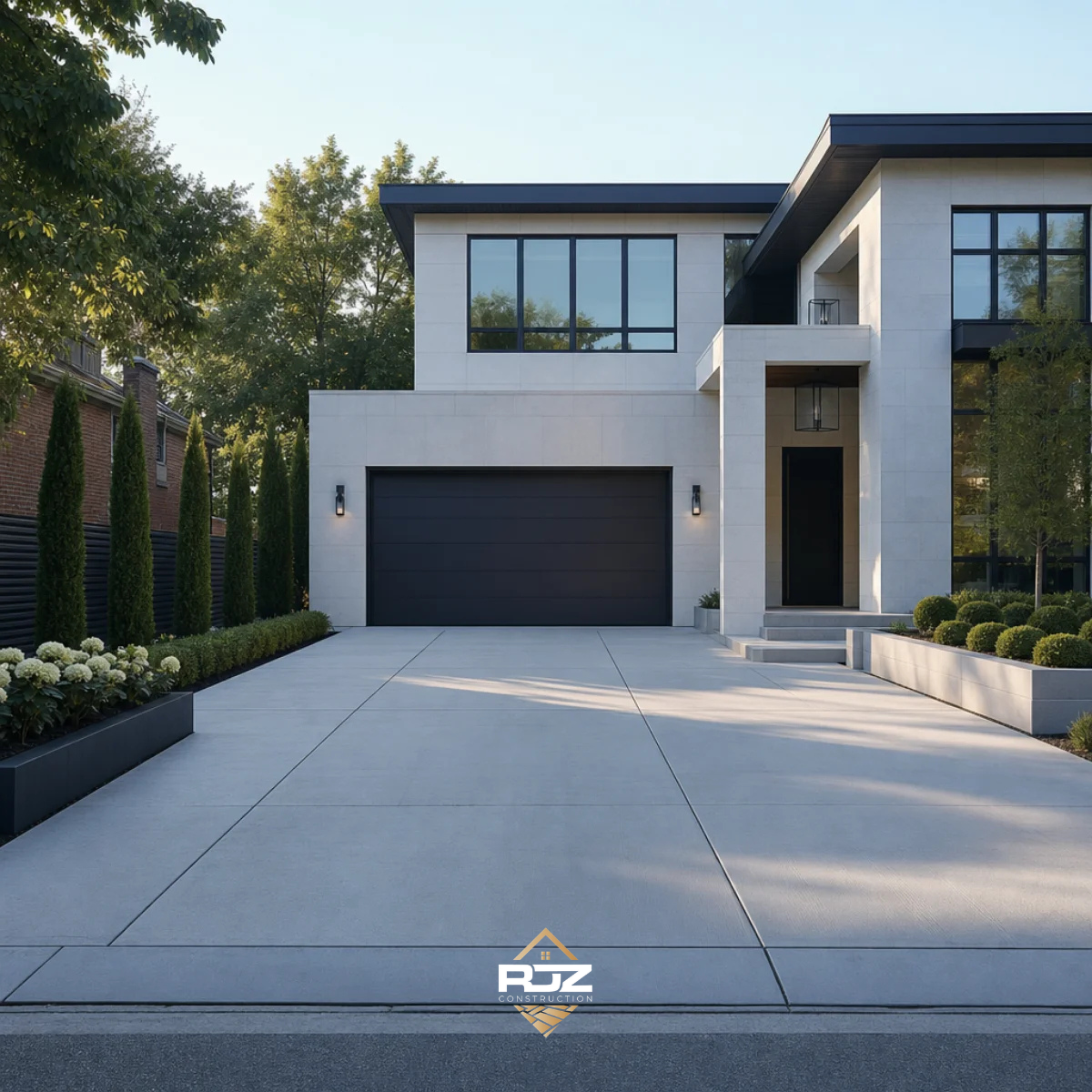
That is why projects often pair finish upgrades with features such as a custom driveway, lighting plan, or seating wall. These details reinforce the property’s identity and create a more complete experience. When the exterior feels unified, the home or business stands out in a subtle but powerful way.
Current Trends Shaping Modern Exterior Finishes
Warm and natural color palettes
One of the biggest shifts in exterior design is the move toward warmer tones. Designers are embracing natural wood finishes, warm taupes, bronze accents, and earthy greens because they feel timeless while still looking current. According to the research insights provided, this trend reflects a significant market shift away from cool grays and stark contrasts. It is not simply a style preference; it is a response to the growing desire for spaces that feel calm, durable, and more closely connected to nature.
These colors work well in both urban and suburban settings. In dense neighborhoods, warm palettes can make facades feel softer and more approachable. In larger residential properties, they help blend architecture with planting beds, stone borders, and outdoor living areas. The result is a property that feels intentionally designed instead of visually fragmented.
Textured and layered materials
Flat surfaces can make a property look unfinished, even if the color is attractive. That is why texture has become such an important part of modern exterior design. Materials like stone, limewash, brick, timber cladding, and composite surfaces create depth and shadow, which add visual interest throughout the day. Research from the provided sources emphasizes that texture is not just decorative; it can also improve weather resistance and durability when selected properly.
This layered approach is especially useful when a property includes multiple outdoor components. For example, a residence might combine smooth stucco, rough-cut stone, and wood-look panels to create contrast without visual clutter. The key is moderation. The best exterior finishes do not compete for attention; they work together to create a cohesive and memorable look.
Sustainable and low-maintenance choices
Homeowners and businesses are increasingly asking for materials that reduce upkeep and extend lifespan. Composite decking, engineered cladding, and responsibly sourced materials are gaining traction because they deliver a natural appearance without demanding constant maintenance. This is particularly appealing in climates that see heavy freeze-thaw cycles, seasonal moisture, and intense summer sun.
Sustainability also has a design side. Eco-friendly materials and native-friendly landscapes appeal to environmentally conscious buyers, but they also tend to age well. The American Society of Landscape Architects has pushed sustainability forward as a core industry expectation, and that shift influences both design strategy and client demand. To understand broader sustainability trends in outdoor design, the American Society of Landscape Architects provides ongoing industry perspectives and standards.
Why Material Selection Matters More Than Ever
Durability protects your investment.
Exterior finishes are exposed to the full range of environmental stressors: sun, wind, rain, ice, and pollution. That means material selection has a direct impact on long-term cost, appearance, and maintenance. A finish that looks beautiful for one season but fails quickly is not really an upgrade. The most successful projects balance aesthetics with performance so the property continues to look polished year after year.
This is where professional planning becomes essential. A finish that performs well in one climate may not be ideal in another. Chicago properties, for example, need materials that can handle harsh winters, temperature swings, and moisture challenges. A design that includes the right masonry, drainage, and structural support will typically last longer and require less corrective work over time.
Material choices shape the entire outdoor experience.
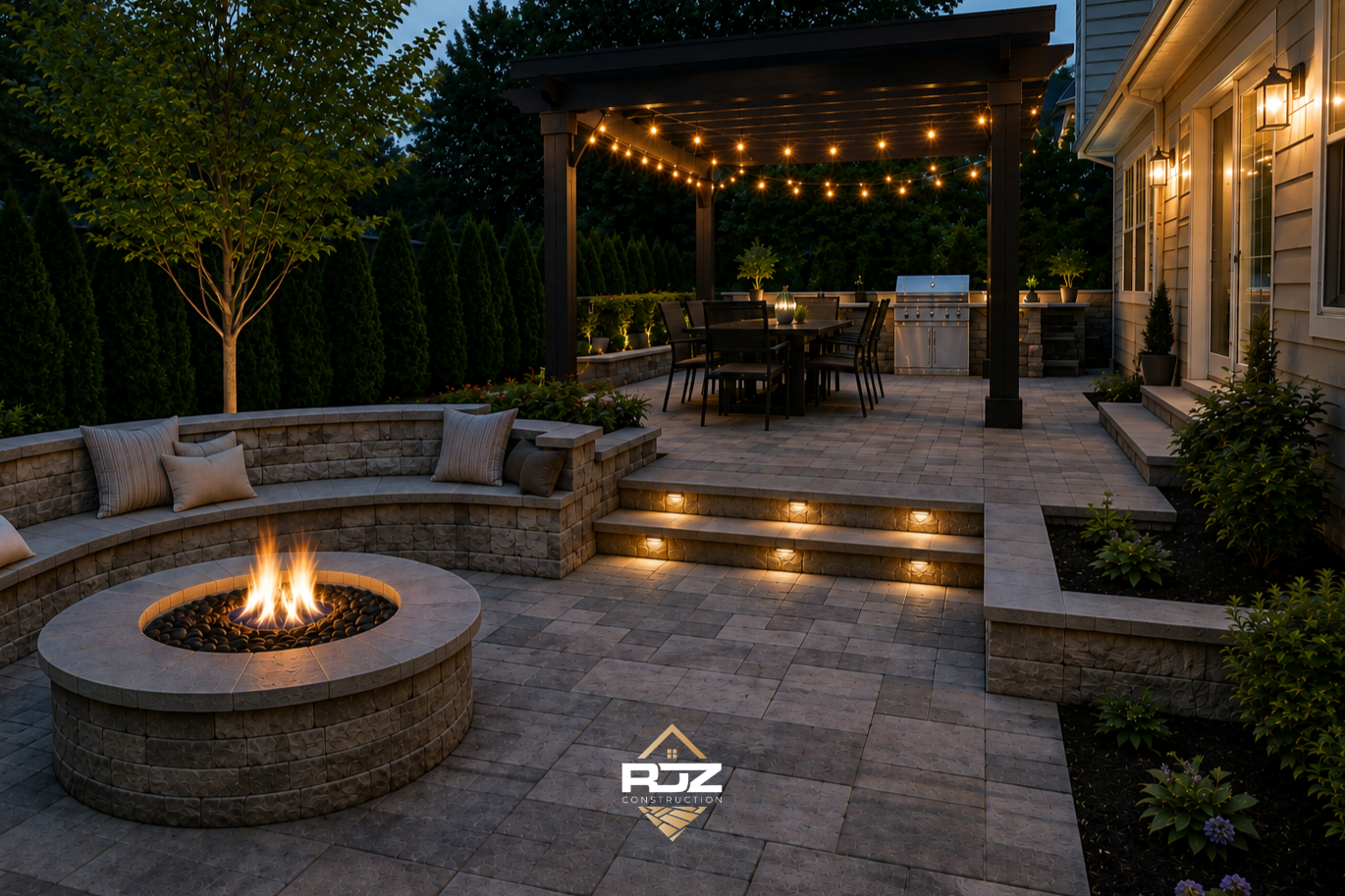
Modern exterior finishes are not limited to the walls of a building. They extend into patios, walkways, planters, retaining structures, and entry sequences. That is why many property owners choose to coordinate finishes with patios, retaining walls, and other outdoor elements that unify the site. When these features share a common color family or texture strategy, the property feels deliberate and well-composed.
For example, a warm limestone tone may be repeated in an entry wall, a garden border, and a patio surface. That repetition creates rhythm, which is one of the simplest ways to make an exterior feel high-end. Even a modest property can appear more polished when the materials are chosen with this kind of consistency in mind.
How Modern Exterior Finishes Improve Function
Better weather resistance and lower upkeep
A beautiful exterior should also make life easier. Modern finishes often perform better than older materials because they are engineered for low maintenance, UV stability, and moisture resistance. Composite products, sealed stone, and properly installed cladding can help reduce the time and money spent on repairs, repainting, and cleanup.
This matters for both residential and commercial properties. A business owner may want an exterior that stays presentable with minimal disruption. A homeowner may want more time enjoying the property and less time maintaining it. Low-maintenance materials make both goals easier to achieve.
Design features can improve usability.
Finishes are not only visual. They also support function by defining edges, directing movement, and improving safety. Lighting, seating walls, and built-in planters help organize the space while making it more comfortable to use. That is why many exterior upgrades are planned alongside outdoor elements that add structure and convenience.
When a property is easier to navigate, it naturally feels more valuable. A walkway with a refined finish, for instance, does more than lead guests to the front door. It creates a sense of arrival. That feeling is a major part of what makes a property stand out.
Designing for Outdoor Living and Everyday Use
Exterior finishes should support how people live.
The best modern exteriors are built around real-life use. Families want spaces for gathering, relaxing, cooking, and moving easily between indoor and outdoor areas. Businesses need exterior systems that present well while holding up to regular traffic. In both cases, the finish strategy should support those patterns instead of ignoring them.
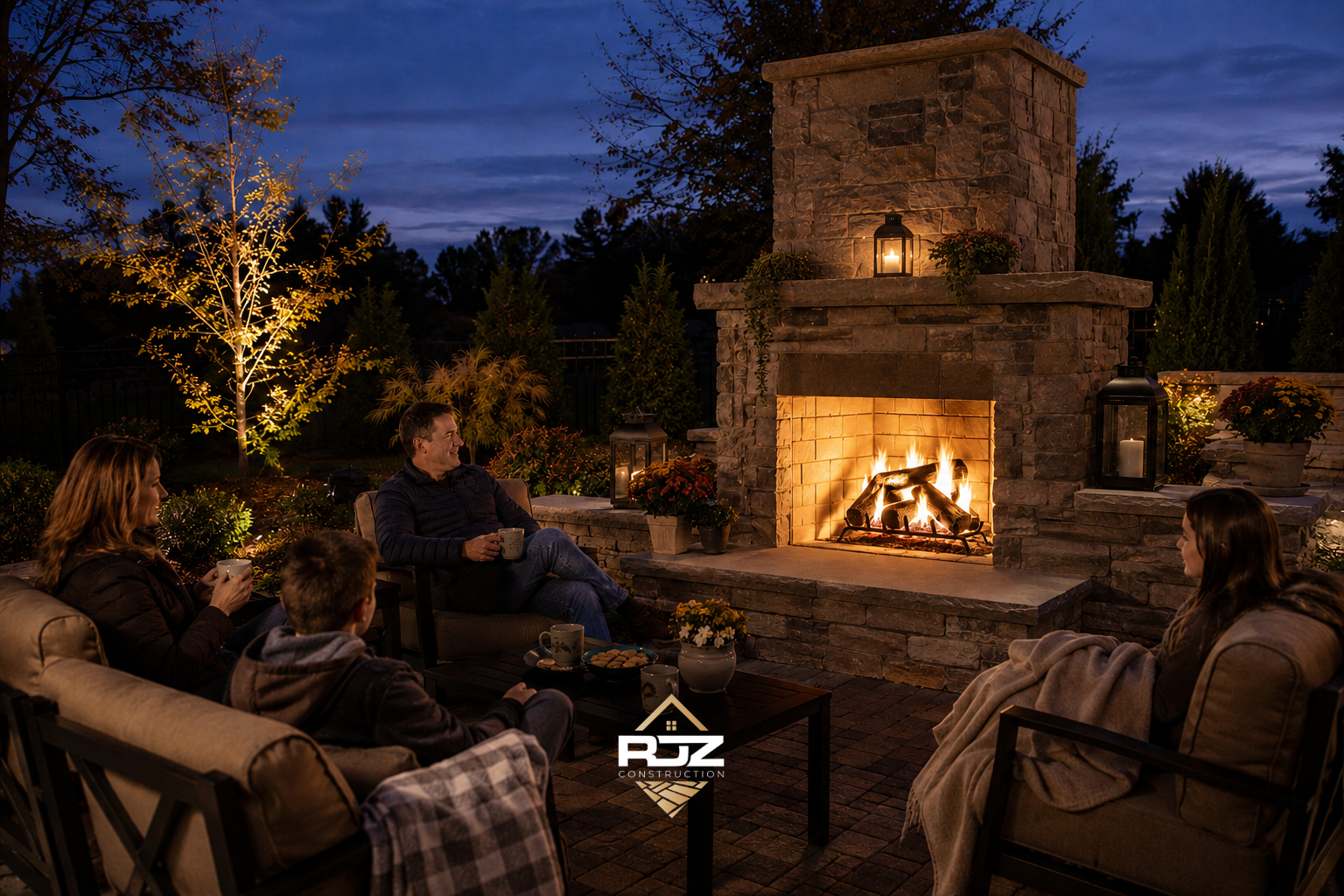
This is where outdoor planning becomes highly practical. A well-finished patio, for example, can create a natural transition zone for dining or entertaining. A fireplace can extend seasonal use and provide a focal point. A coordinated entry sequence can make the whole property feel more welcoming. When these features are integrated from the start, the result is more cohesive and more functional.
Landscape construction ties the whole property together.
Exterior finishes work best when they are connected to a larger site plan. That includes grading, drainage, planting, hardscape layout, and focal points. A property that receives professional landscape construction is more likely to look polished because the structure underneath the design has been carefully considered. Without that foundation, even attractive materials can look out of place.
In practical terms, this means thinking about how people approach the property, where water flows, where shade falls, and how different materials age together. Strong design does not happen by accident. It is the result of decisions that consider both appearance and performance from the beginning.
Real-World Examples of Modern Exterior Success
Urban renewal and property value
The research package notes that several urban renewal projects in Chicago have successfully integrated warm, natural materials into their exteriors, resulting in increased property values and stronger community engagement. This makes sense because attractive exteriors do more than serve individual owners. They help improve the visual character of a block, which can influence how the entire area is perceived.
When properties look cared for and contemporary, they can encourage neighboring owners to invest as well. That compounding effect is one reason exterior upgrades are often viewed as strategic rather than purely cosmetic. A well-designed finish can contribute to broader neighborhood momentum.
Suburban projects with lower maintenance demands
Another example from the research involves a recent suburban development that used composite decking and native plantings to reduce maintenance costs while improving sustainability. This approach is valuable because it shows how design and practicality can work together. The exterior still looks refined and modern, but it requires less constant upkeep, which is attractive to both developers and owners.
These examples also reinforce an important lesson: modern finishes are not about chasing trends for their own sake. They are about choosing durable, adaptable systems that continue to deliver value over time. That is the difference between a stylish upgrade and a lasting improvement.
How to Choose the Right Exterior Finish Strategy
Start with climate and exposure.
The first step is to consider how the property is exposed to weather. Surfaces that receive intense sun may need UV-resistant materials. Areas with heavy moisture need finishes that resist mold, swelling, or erosion. In freeze-thaw climates, installation quality is just as important as the material itself because movement and water intrusion can cause failure if details are overlooked.
This is why consulting local experts matters. A finish that looks impressive in a showroom may not perform well in your environment. The right professional will recommend materials based on both design goals and local conditions, reducing risk and improving long-term satisfaction.
Think about maintenance expectations.
Some property owners enjoy routine maintenance, while others want the lowest-possible upkeep. Be honest about how much time and effort you want to spend after installation. If the answer is “very little,” then engineered products, sealed surfaces, and durable masonry may be better than high-maintenance natural finishes.
Maintenance expectations should also include cleaning, sealing, seasonal inspections, and repair cycles. A good finish strategy accounts for all of those factors upfront. That way, the property continues to look refined without becoming a burden.
Coordinate finishes with the rest of the site.
Finishes should never feel isolated from the broader landscape. They should complement paving, planting, lighting, and any built features. If you are considering a larger upgrade, it may help to look at related services such as driveways and fireplaces to create a more complete property experience. When the finishes connect across the site, the visual effect is much stronger.
This is also where phased planning can be useful. Not every project needs to happen all at once. A thoughtful sequence of improvements can still deliver a cohesive final result if the material palette and design language remain consistent throughout.
Modern Exterior Finishes in Chicago and Beyond
Local architecture deserves a modern response.
In Chicago, exterior design has to respect both architectural heritage and modern performance standards. Brick, limestone, metal, and timber accents can be combined in ways that feel contemporary without ignoring the character of the neighborhood. That balance is especially important in cities where old and new structures often sit side by side.
For property owners in the area, a strong finish strategy can create a bridge between tradition and innovation. It can preserve a familiar sense of place while updating the property for how people live today. This is one reason modern finishes are becoming such a practical choice for urban and suburban properties alike.
Regional expertise improves the outcome.
Working with a team that understands the local environment can make a big difference. Climate, grading, drainage, and neighborhood context all influence the success of an exterior project. A design that looks great on paper still needs to perform in the real world, and that requires careful construction decisions from day one.
For more background on how outdoor investments add value, you may also find this related article useful: Professional Landscape Construction in Chicago, IL: Why Outdoor Projects Add More Value Than You Expect. It expands on the long-term financial and lifestyle benefits of outdoor improvements.
Common Questions About Modern Exterior Finishes
Will these trends still feel relevant in a few years?
Yes, if you focus on timeless materials and balanced design. Trends will continue to evolve, but warm palettes, natural textures, and durable finishes have staying power because they are rooted in comfort and performance. Choosing a design that feels connected to the property’s architecture will help it age well even as style preferences shift.
How do I avoid a finish that looks too trendy?
Keep the foundation neutral and let smaller details carry the contemporary feel. For example, use classic stone or masonry as the base, then introduce modern accents through lighting, metal trim, or wood-look materials. This approach gives you a current look without locking the property into a short-lived fad.
What is the best way to plan a complete exterior update?
Start with a clear assessment of your goals, budget, and maintenance preferences. Then work outward from the property’s most important focal points, such as the front entry, patio, or main gathering area. When those spaces are coordinated with the rest of the landscape, the entire property feels more intentional and more valuable.
If you want more ideas for how outdoor upgrades can work together, you can also review this guide: Backyard Design Ideas to Create a Functional Outdoor Space. It offers a helpful look at how layout, materials, and usability fit into one cohesive plan.
Conclusion: Make Your Property Stand Out with Purpose
Modern exterior finishes stand out because they do more than improve appearance. They create harmony, support durability, reduce maintenance, and help a property feel current without feeling temporary. Warm colors, layered textures, sustainable materials, and thoughtful site planning are reshaping the way homeowners and businesses think about curb appeal. These choices also make it easier to build outdoor spaces that are practical, welcoming, and resilient.
If you are planning an update, the most effective approach is to think beyond individual materials and focus on the full experience of the property. How does the space look, feel, and function from the street to the backyard? What materials fit the climate, the architecture, and the lifestyle? Answering those questions early will lead to stronger results and a finish that remains appealing for years.
For expert guidance, thoughtful planning, and durable outdoor solutions, explore RDZ Construction LLC’s services and see how modern exterior finishes can transform your property into something that truly stands out. If you are ready to start planning, we invite you to learn more about our landscape design and outdoor elements services, or contact our team to discuss your next project today.
To continue learning about exterior design and sustainable outdoor planning, the U.S. Environmental Protection Agency sustainability resources and the National Park Service sustainability guidance provide additional context on environmentally responsible design choices that can support long-term property performance.